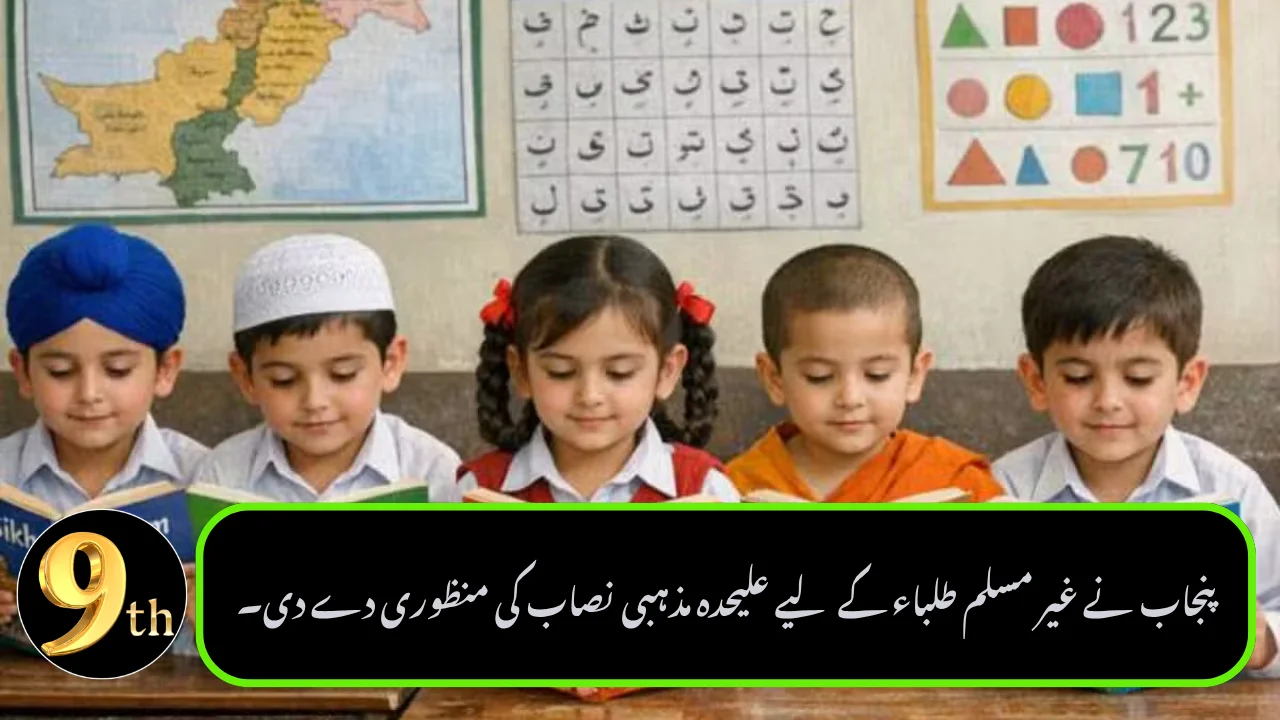
Punjab has approved a separate religious curriculum for non-Muslim students for the first time, with new faith-based textbooks set to be introduced from the 2026-27 academic session.
The decision was announced by the Punjab Curriculum and Textbook Board (PCTB), which said the initiative aims to make education more inclusive by allowing minority students to study religious education according to their respective beliefs.
New Textbooks Introduced for Minority Communities
Under the new policy, students from different religious communities will study dedicated subjects based on their faith.
The approved curriculum includes:
- ✝️ Christian Education for Christian students in Grades 1 to 9 and Grade 11
- 🕉️ Sanatan Dharma for Hindu students in Grades 1 to 3
- ☬ Sikh Dharma for Sikh students in Grades 1 to 3
- 🌿 Kalasha Education for students from the Kalasha community
- ☸️ Buddhism for Buddhist students in Grades 1 to 3
- 🔥 Zoroastrianism for Zoroastrian students from Grades 1 to 5
Curriculum to Start From Academic Session 2026-27
According to PCTB officials, the approved textbooks and curriculum will be implemented from:
📅 Academic Session 2026-27
The authority has circulated the notification to:
- Educational boards
- District education authorities
- Relevant educational institutions
for implementation and enforcement.
Focus on Educational Inclusion
Officials said the initiative is intended to ensure that minority students receive religious education that reflects their beliefs and traditions.
The move also aims to promote:
- Inclusive education practices
- Equal learning opportunities
- Recognition of Pakistan’s religious diversity
- Curriculum options tailored to different student communities
First Dedicated Curriculum for Kalasha Students
The policy also marks the first introduction of a formal educational curriculum specifically designed for the:
🌿 Kalasha community
making it one of the notable additions under the new education framework.
A New Step in Punjab’s Education Policy
Education officials say the introduction of separate religious curricula represents an important policy development in Punjab’s education system by expanding curriculum choices for minority students and incorporating faith-based education for various religious communities from the upcoming academic session.