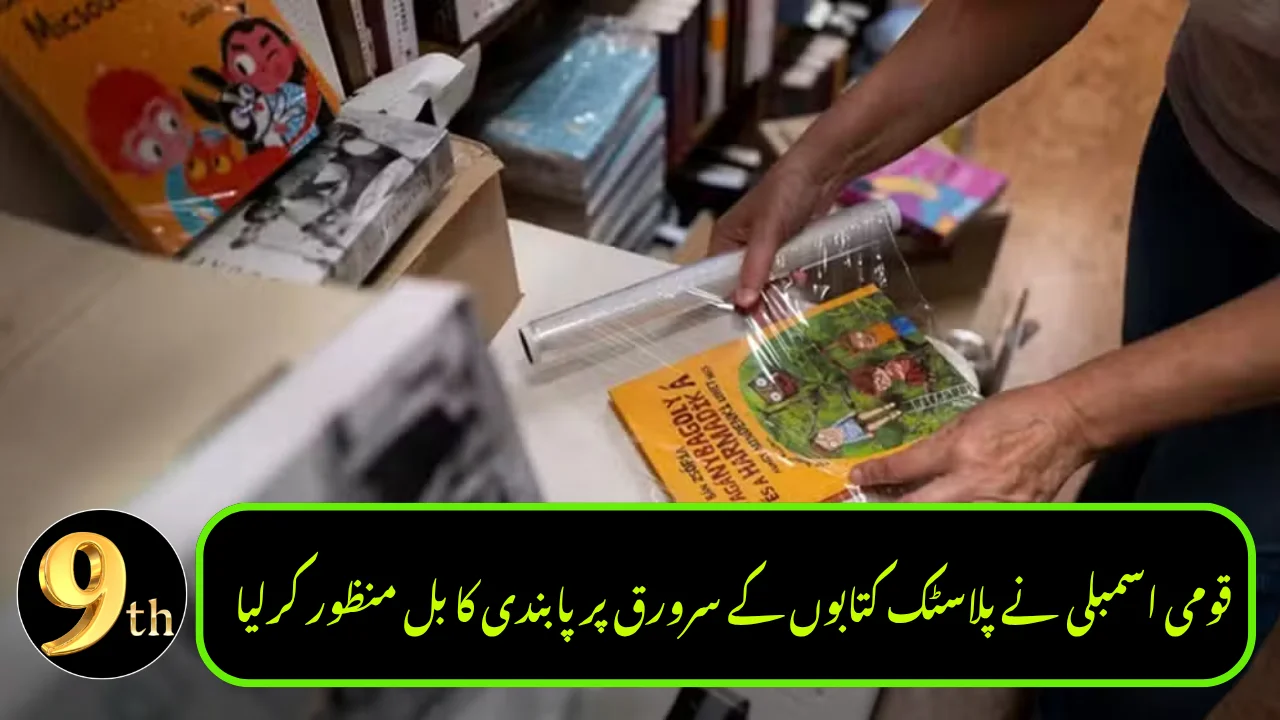
The National Assembly of Pakistan has passed a bill aimed at banning the use of plastic covers on books in Islamabad as part of efforts to reduce environmental pollution and promote healthier alternatives.
According to the proposed legislation, plastic book covers are harmful to both the environment and public health.
Plastic Waste Concerns Highlighted
The bill states that Pakistan produces nearly:
♻️ 3.9 million tonnes of plastic waste annually
Officials noted that a large portion of this waste is:
- Non-recyclable
- Harmful to wildlife
- Damaging to water resources and the environment
Schools Encouraged to Use Eco-Friendly Alternatives
Under the proposed measures:
- 📚 Schools and educational institutions in Islamabad will be discouraged from using plastic book covers
- 🌱 Eco-friendly alternatives will be promoted instead
Recommended alternatives include:
- Paper covers
- Cloth materials
- Biodegradable wrapping products
Bill Challenges Common Perception
The legislation also rejects the common belief that plastic covers are the best long-term protection for books.
Officials described this perception as:
- Misleading
- Environmentally damaging
The government says sustainable alternatives can provide similar protection without increasing plastic pollution.
Similar Action Taken in Sindh
The development comes shortly after the Sindh Environment Department enforced a province-wide ban on plastic bags.
According to officials:
- Production, sale, and use of plastic bags have been prohibited
- Violators may face legal action, fines, or arrest
Authorities stated that plastic waste contributes heavily to:
- Marine pollution
- Drainage blockages
- Environmental damage
Final Words
The newly passed bill reflects growing efforts in Pakistan to reduce plastic waste and encourage environmentally friendly practices in schools and educational institutions. Authorities hope the move will help promote awareness about sustainable alternatives among students and parents.